
Search Engine Optimization WordPress websites
Case Muuttohaukat: top of Google for the moving industry’s biggest searches
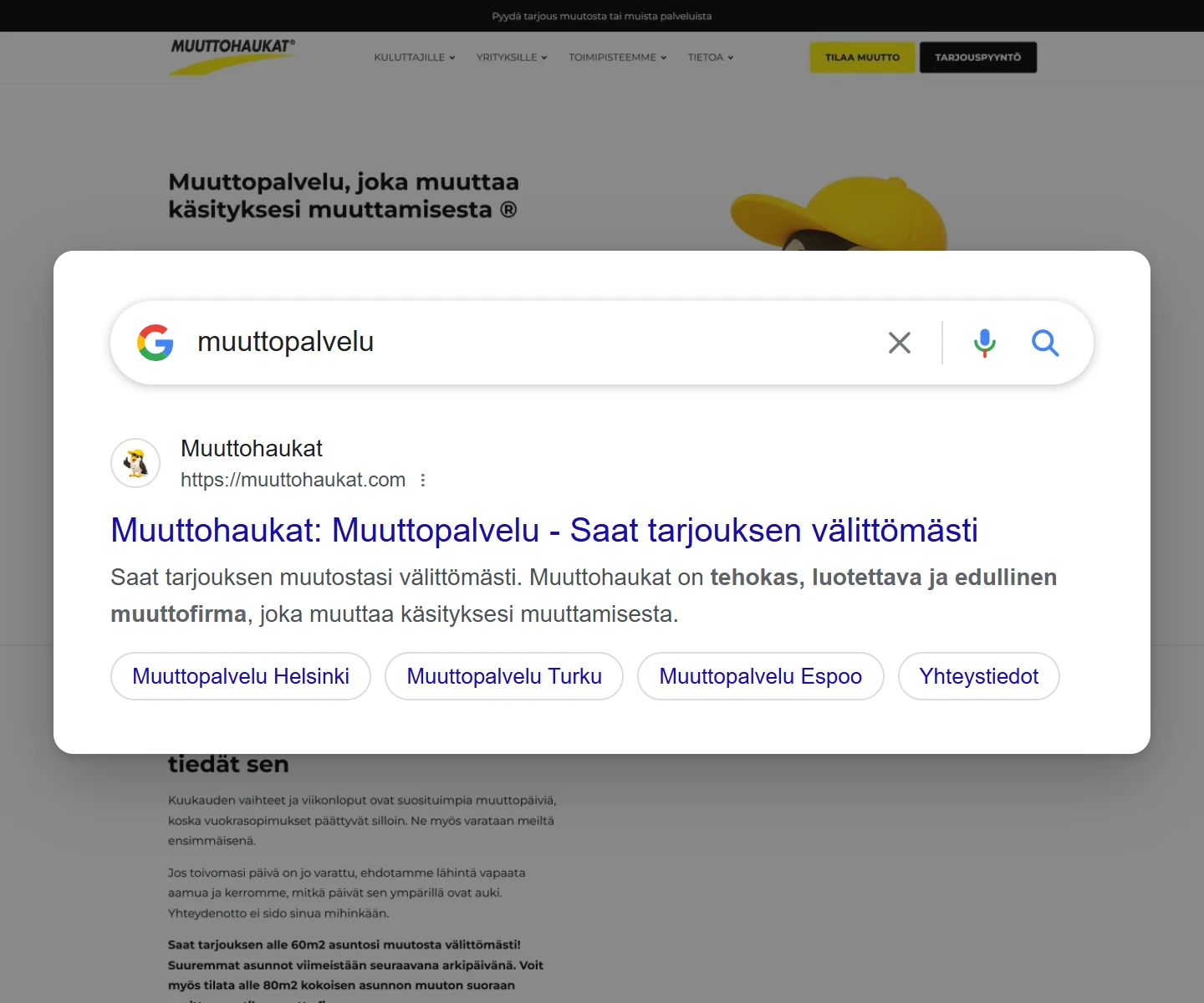
Landing pages for four offices: top 3 on Google for “muuttopalvelu” and “muutto” (moving).
I help companies show up on Google in Finland, for the Finnish searches their customers make.
The free check is a 60-minute Google Meet call, in English. All prices exclude VAT.Happy clients since 2012





Your customers in Finland search in Finnish, and Google shows them Finnish pages. A translation gets you the words, not the searches.
Finnish nouns take 15 case endings and join into compounds, so one idea is searched in many forms. I find the forms your customers use, and the volume behind each.
I write your pages in Finnish myself, one search per page, so that they read naturally and answer what Finns ask.
Google trusts a site that other sites link to. Your links come from Finnish websites, in Finnish articles on your topic.
We talk in English: the free check, the monthly check-in meetings and every email. You always know what I am doing and why.
To get your site to the top positions in Google search results, these tasks are typically performed.
How do your industry’s competitors currently appear on Google? What actions have they taken?
Comprehensive report on the top 10 competitors
Where do you currently show up in searches? What words do people use to find your services?
Comprehensive report on search terms
Does your site work on all devices? Are there problems in the site’s code? How fast do pages load?
Fixing site issues
Is the site content formatted according to SEO best practices?
Optimizing existing content and creating new content
Even the best-optimized page won’t be visible if there are no external links pointing to it.
As an option, you get 5 external links from my wide network of Finnish websites.
A tracking tool to monitor and improve search visibility.
Automated email reports and a dashboard
SEO is part of the Coding SEO Consultant service: €760/month, typically 8 hours of work a month.
Monthly service
€760 /month
Typically 8 hours a month. Prices exclude VAT.
A monthly service in which I take care of your SEO, your website and your Google Ads.
No start-up fee. Cancel any time.
Need only one thing? Custom quote
The price includes
Optional: 5 links from other Finnish websites.
The monthly service pays off especially when the website is large (100+ pages), its content changes all the time, or your field has hard competition.
When I find a fault on your website, I don’t leave it in a report: I fix it myself, in the code too.
I have built hundreds of websites with WordPress. Coding them took me deep into the world of SEO.
Even the best ad campaign fails if the page it leads to doesn’t convert. That’s why I take care of SEO, your website and your advertising together.
Every month I spend the hours where they bring the most.
SEO starts with an analysis and fixes, and continues every month with new content and improvements.
Let’s see how your site appears on Google now, how customers search for your products, and what your potential visibility is.
We analyze the current visitors: where they come from and who they are.
How often is each search term used, and which keyword opportunities should we target?
A fix plan if the site has technical issues, recommendations for on-site changes (headings, meta data, site structure), and suggestions for ongoing SEO development based on the keyword research: which terms to create content for.
The changes and new content are created based on the plan.
It’s important to monitor SEO. Often results show up several weeks or even months after actions are taken.
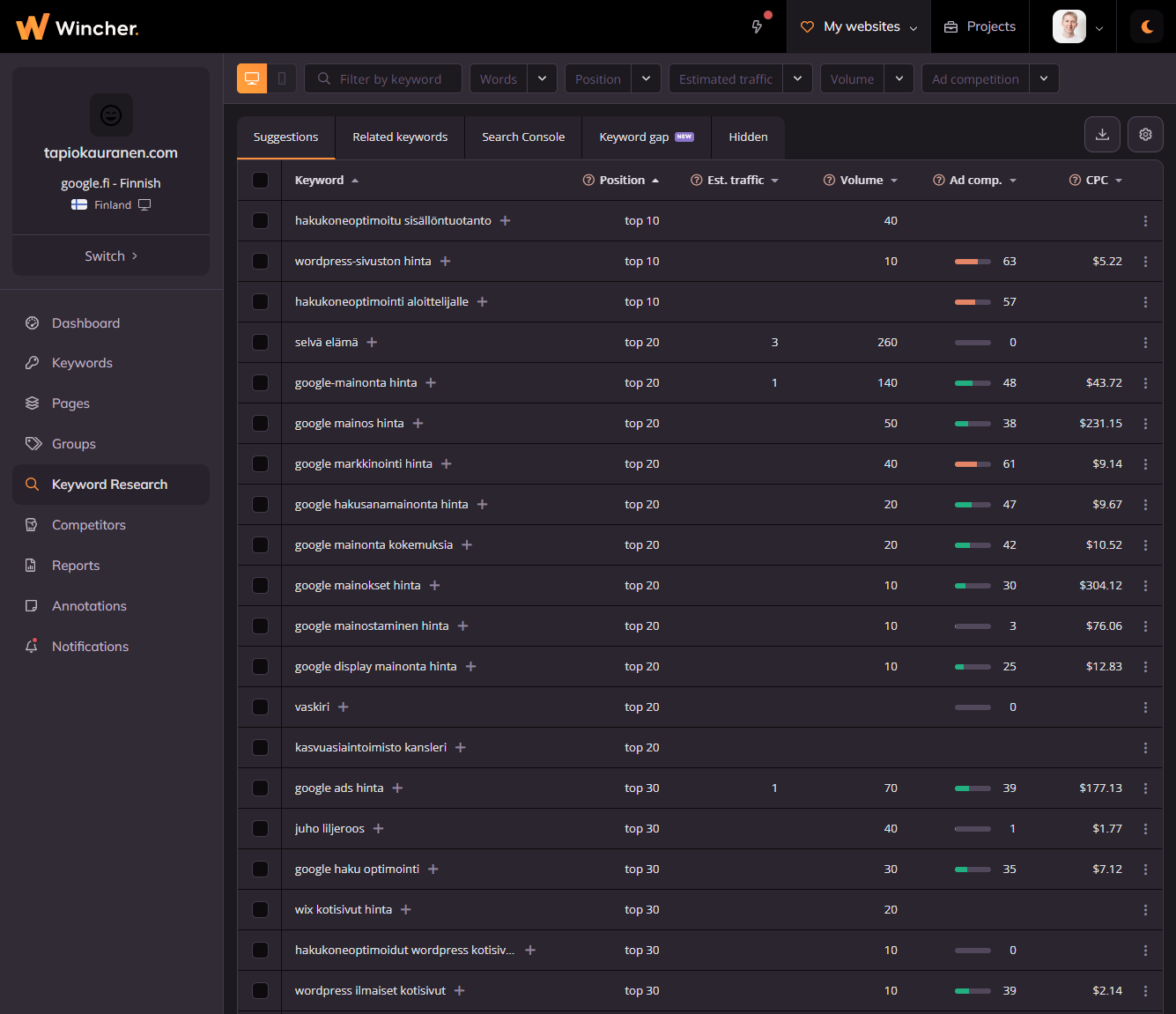
Monitoring SEO is easiest with Google Search Console and a paid tool like Wincher.
In the live dashboard you see how keyword visibility changes day by day, the search volume trends (how many searches per month), how competitors appear in search, and what percentage of the total search market you own (Share of voice).
A one-time optimization can deliver results for years.
My clients’ results on Google in Finland. Each has a page that tells what I did and what came of it.
Search Engine Optimization WordPress websites
Landing pages for four offices: top 3 on Google for “muuttopalvelu” and “muutto” (moving).
Search Engine Optimization WordPress websites
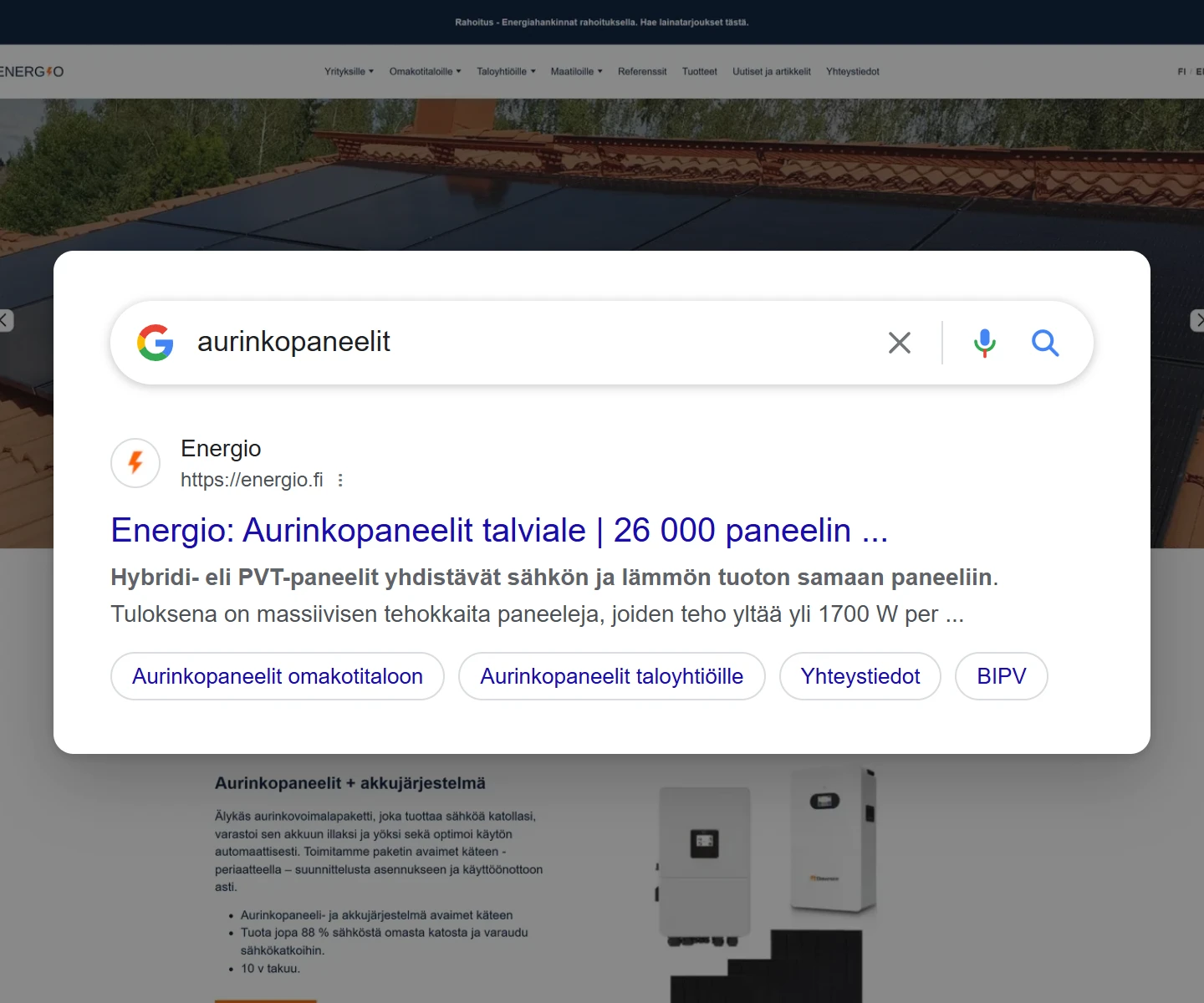
From Shopify to WordPress, plus SEO: #1 on Google for “aurinkopaneelit”.
Search Engine Optimization
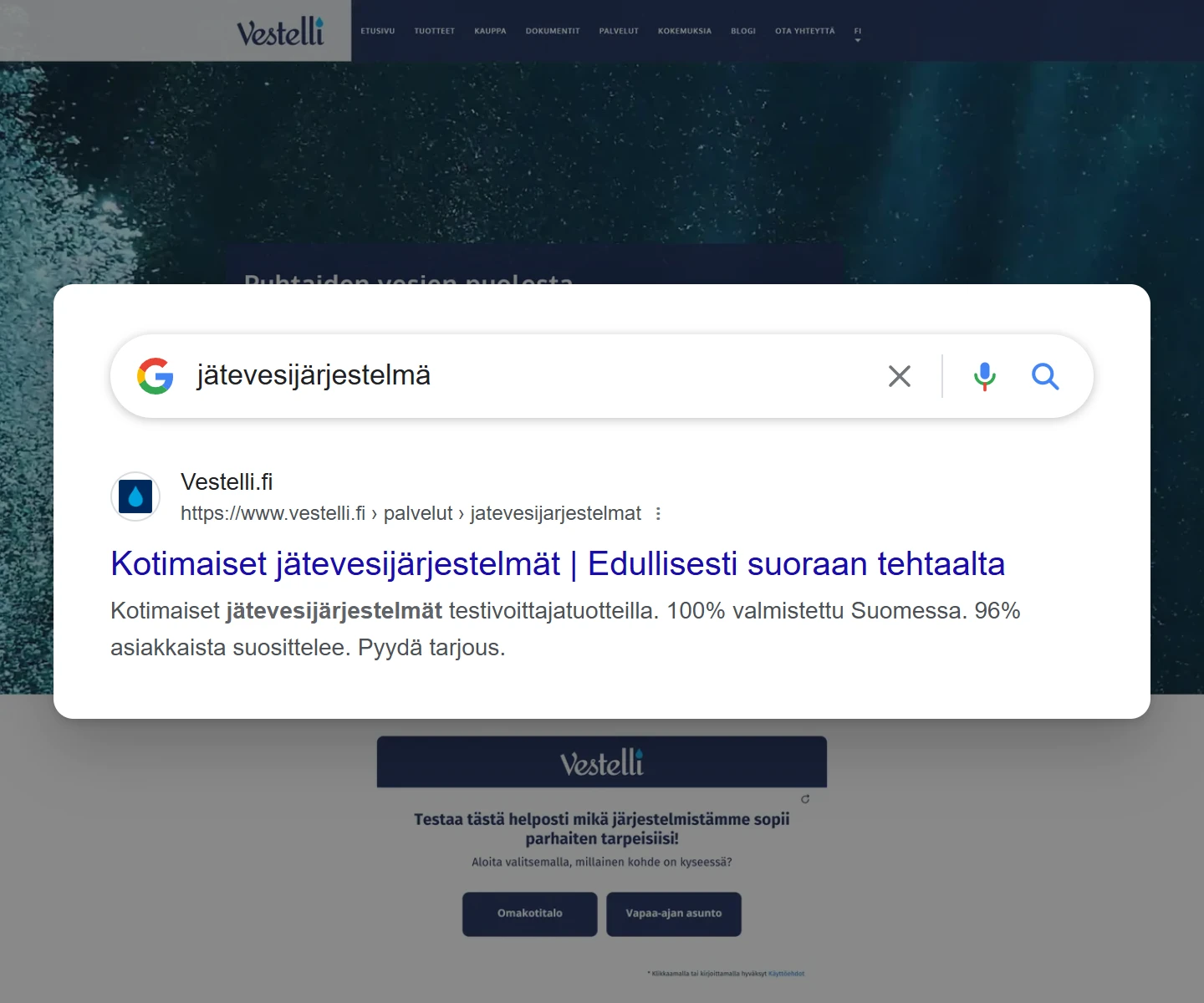
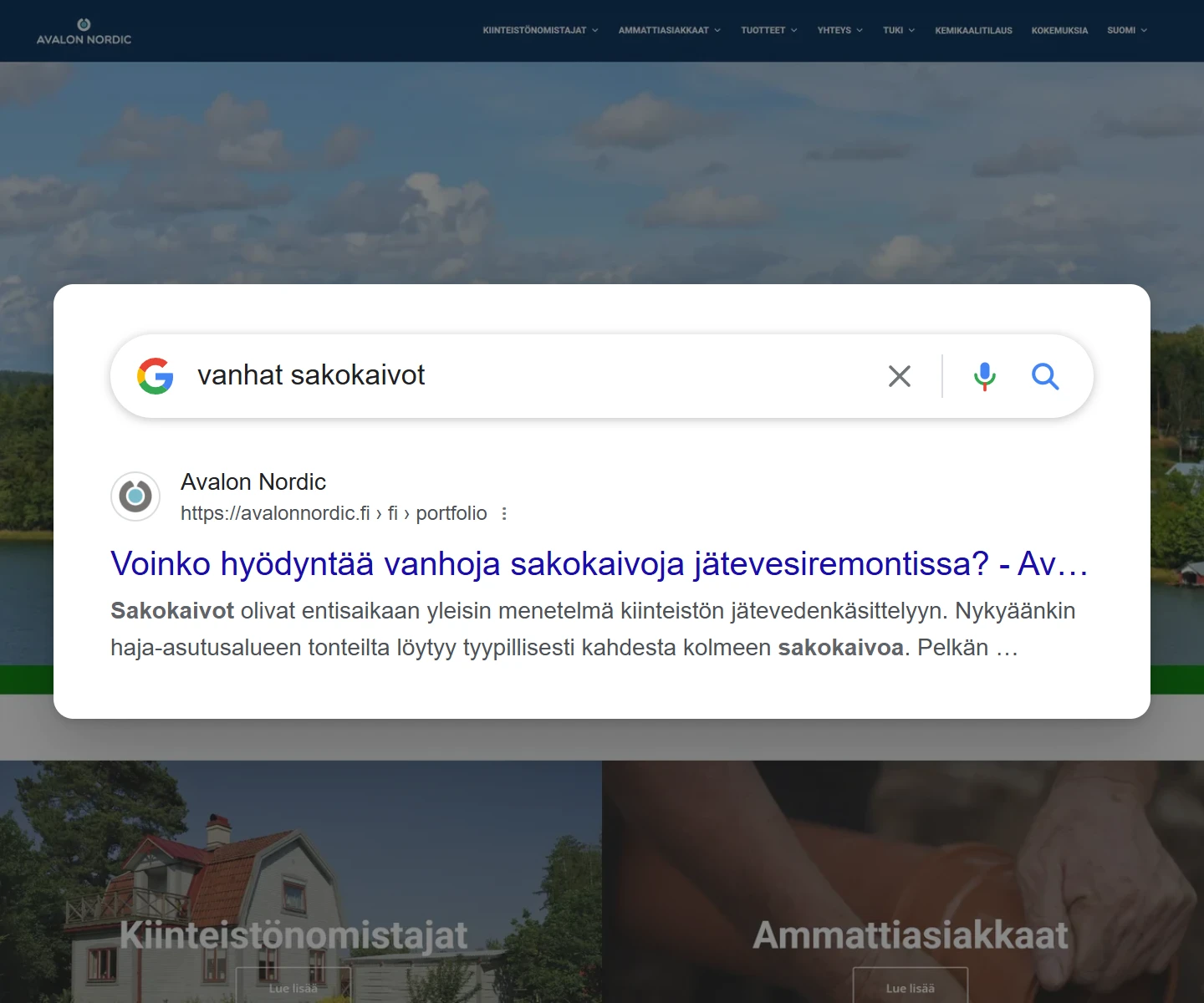
SEO: page one of Google for “biopuhdistaja” and “jätevesijärjestelmä”.
Search Engine Optimization WordPress websites
Website renewal, SEO and marketing: 15,000+ clicks from Google in 16 months.
Search Engine Optimization
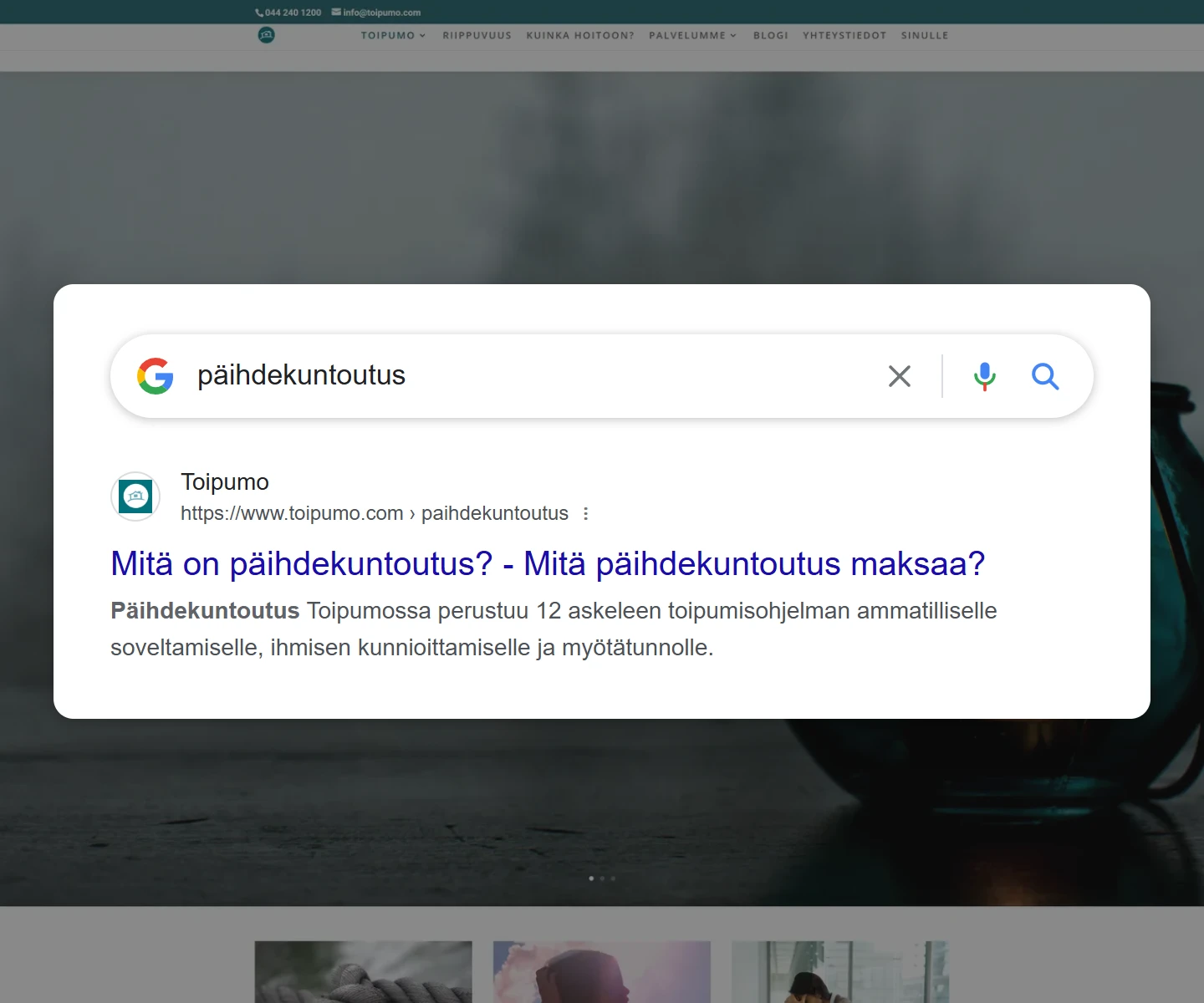
A new page and links: Google’s first page for “päihdekuntoutus” for years.
Search Engine Optimization
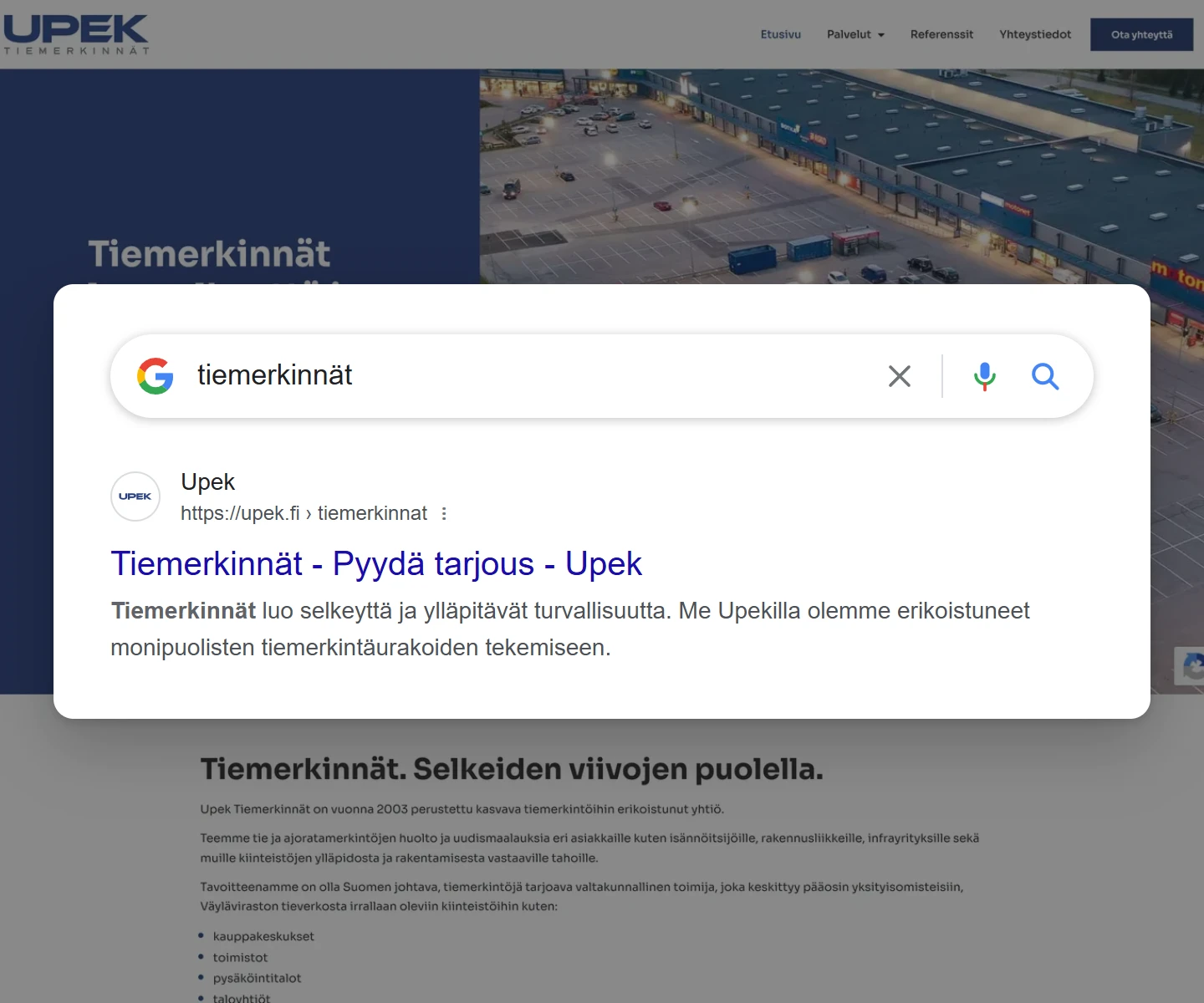
A small SEO project: Google top spots for “tiemerkinnät” and “parkkiruutujen maalaus” (parking bays).
Search Engine Optimization
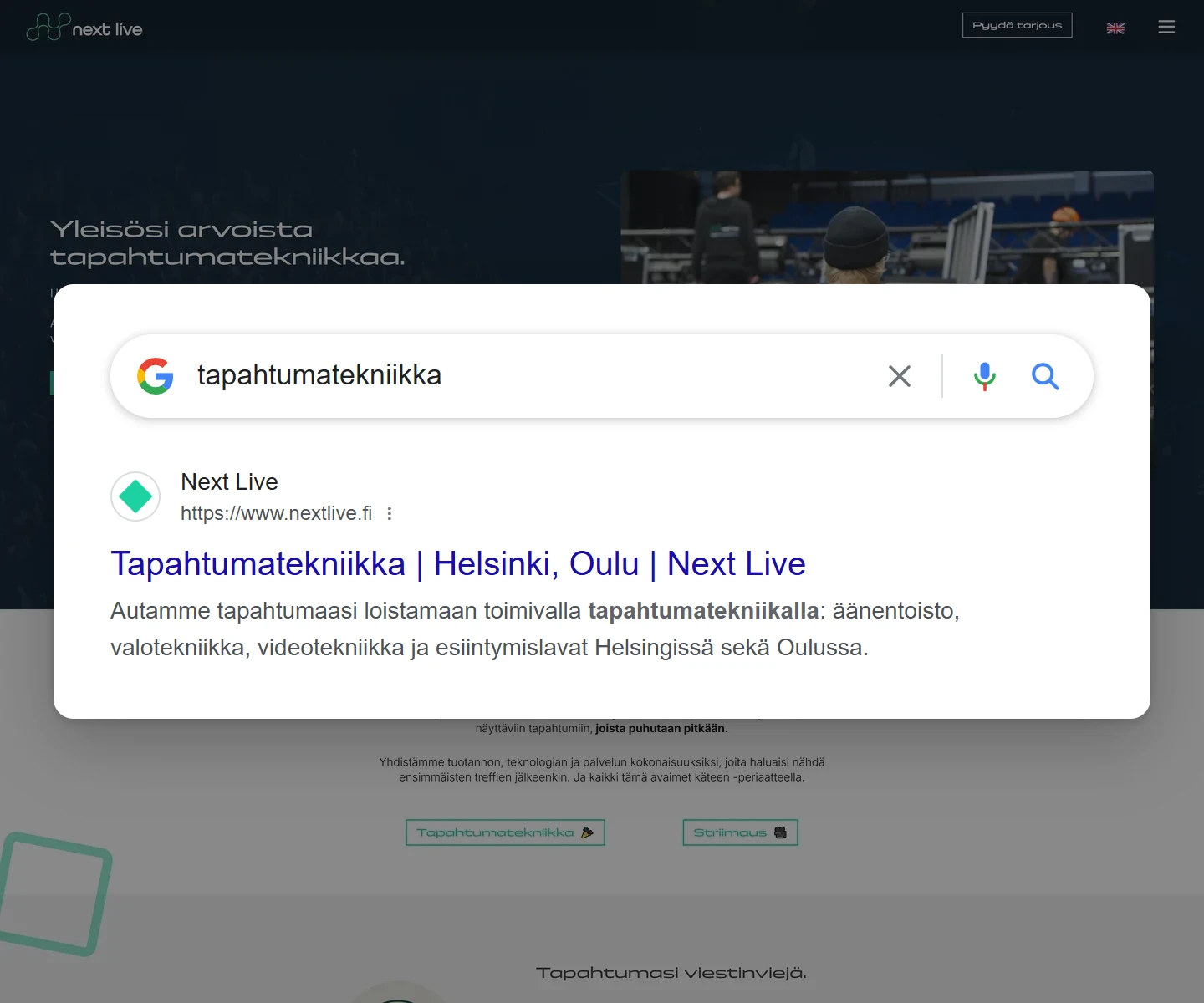
SEO and Google Ads: top 3 for “tapahtumatekniikka”, organic traffic +280%.
Search Engine Optimization
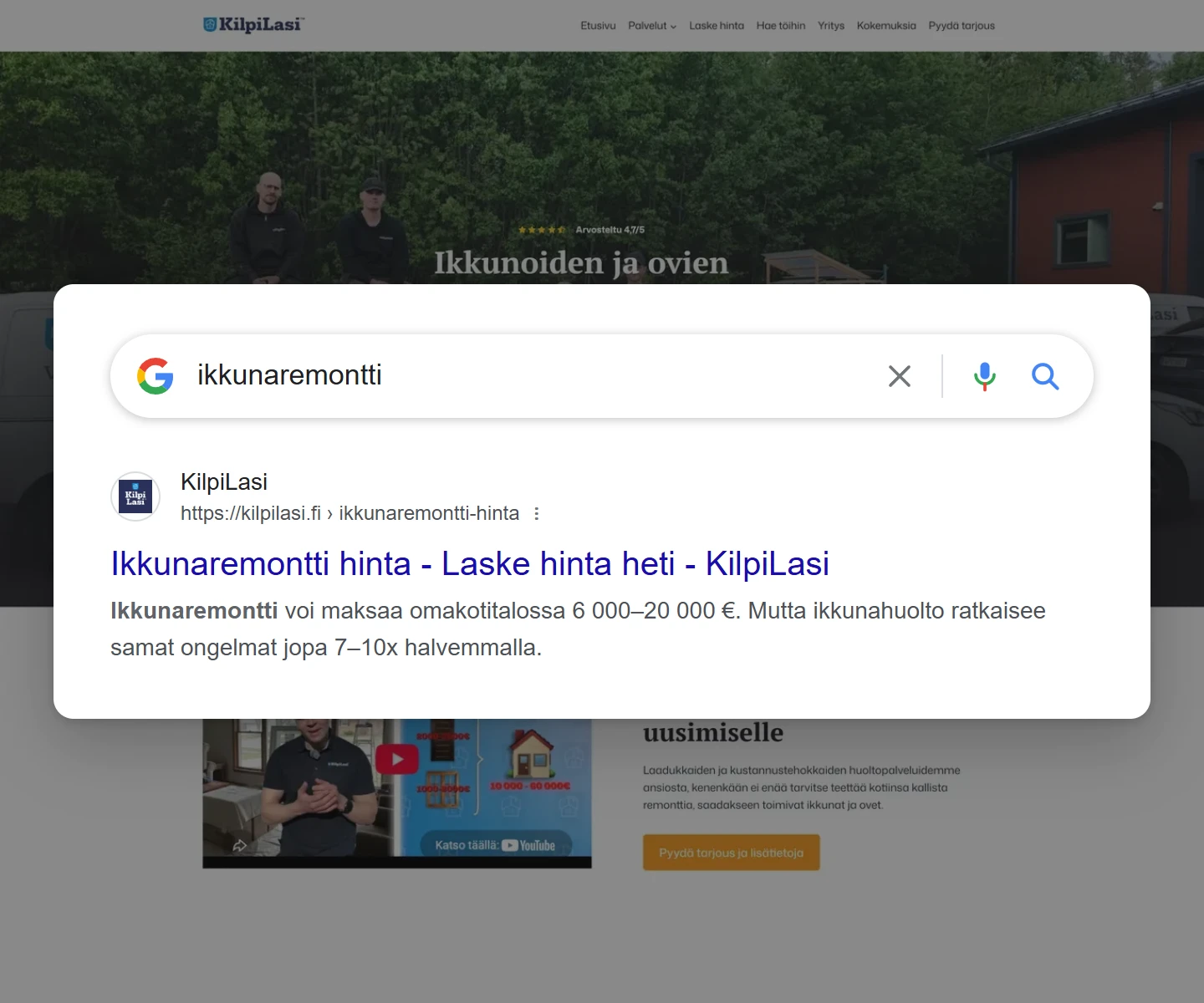
SEO for the Finnish search “ikkunaremontti”: new subpages, meta data, links.
Search Engine Optimization WordPress websites
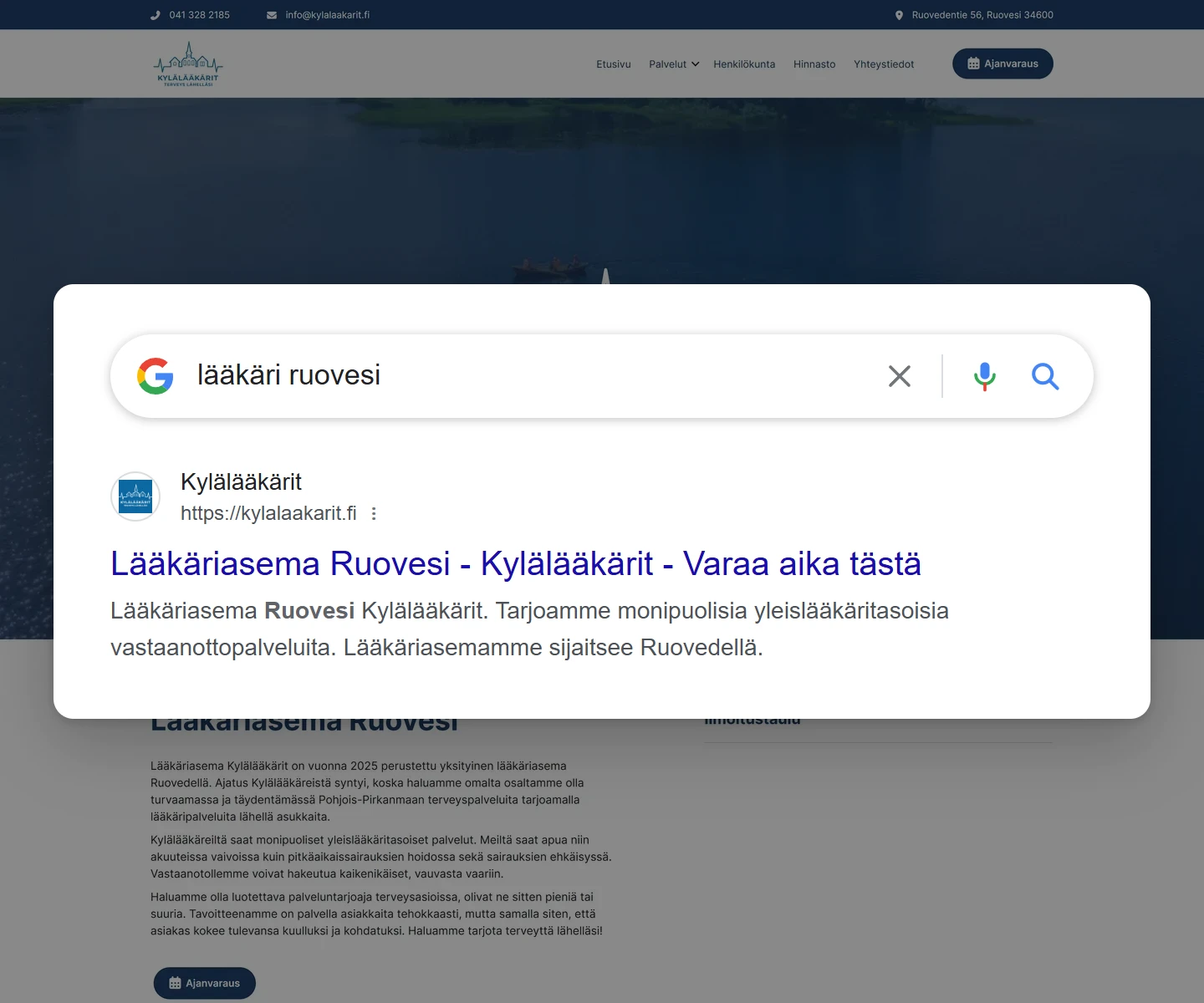
A new clinic website: top of Google from opening day for “lääkäri Ruovesi” (doctor Ruovesi).
Search Engine Optimization WordPress websites
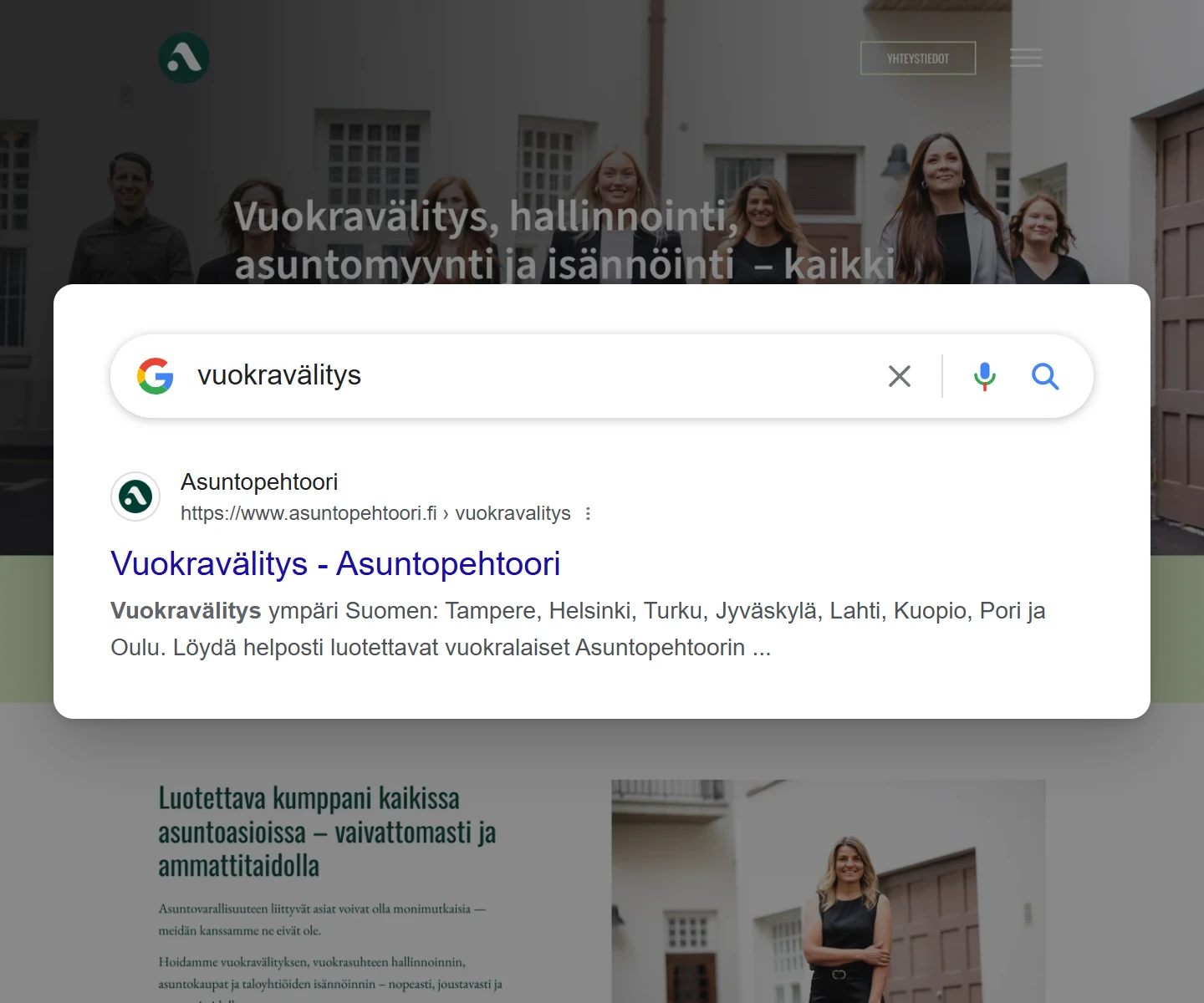
WordPress redesign: #3 on Google for “vuokravälitys” (rental brokerage), 100,000+ visits a year.
Search Engine Optimization
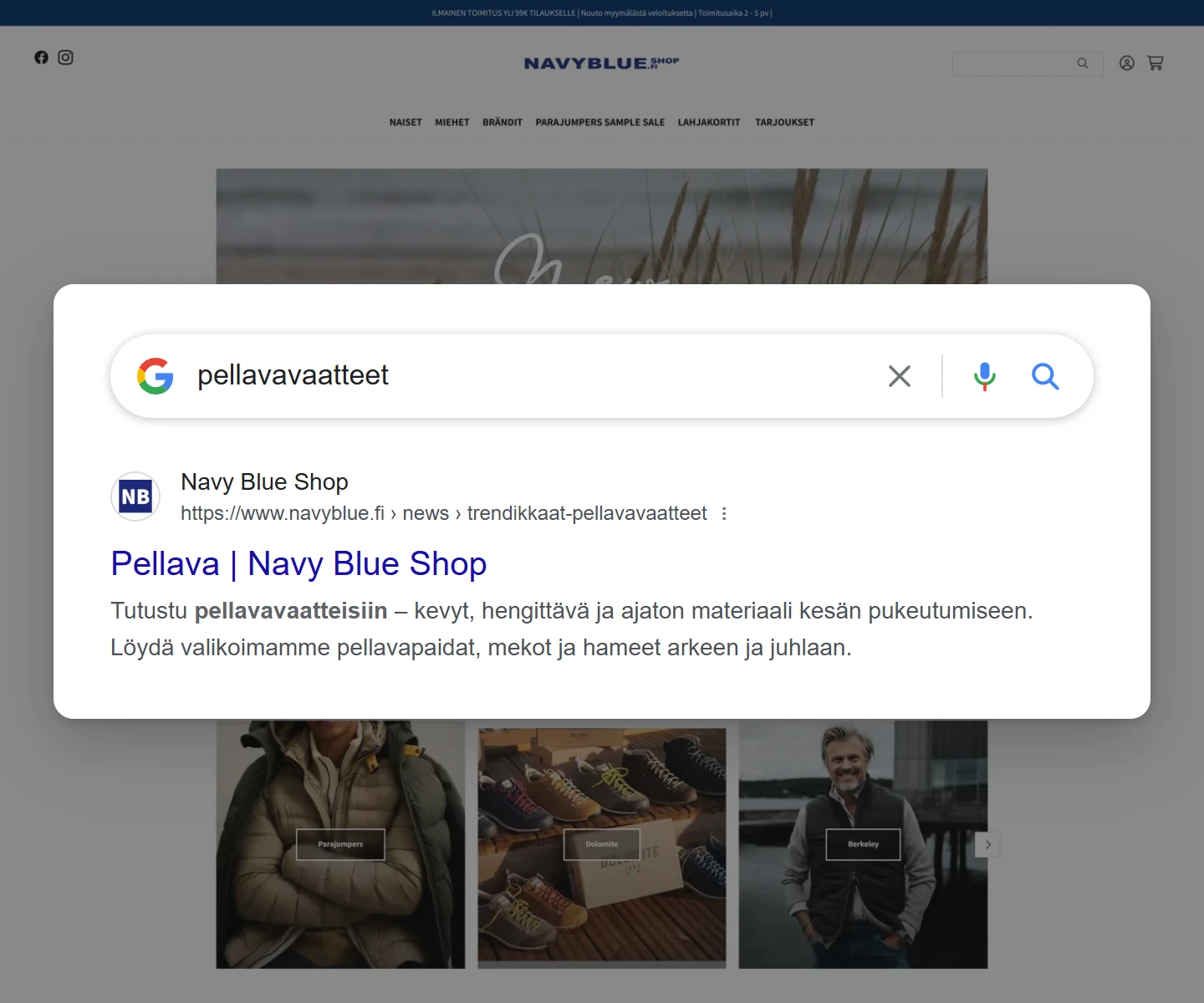
Category pages and meta data: page one of Google for “pellavavaatteet” (linen clothing).
Search Engine Optimization
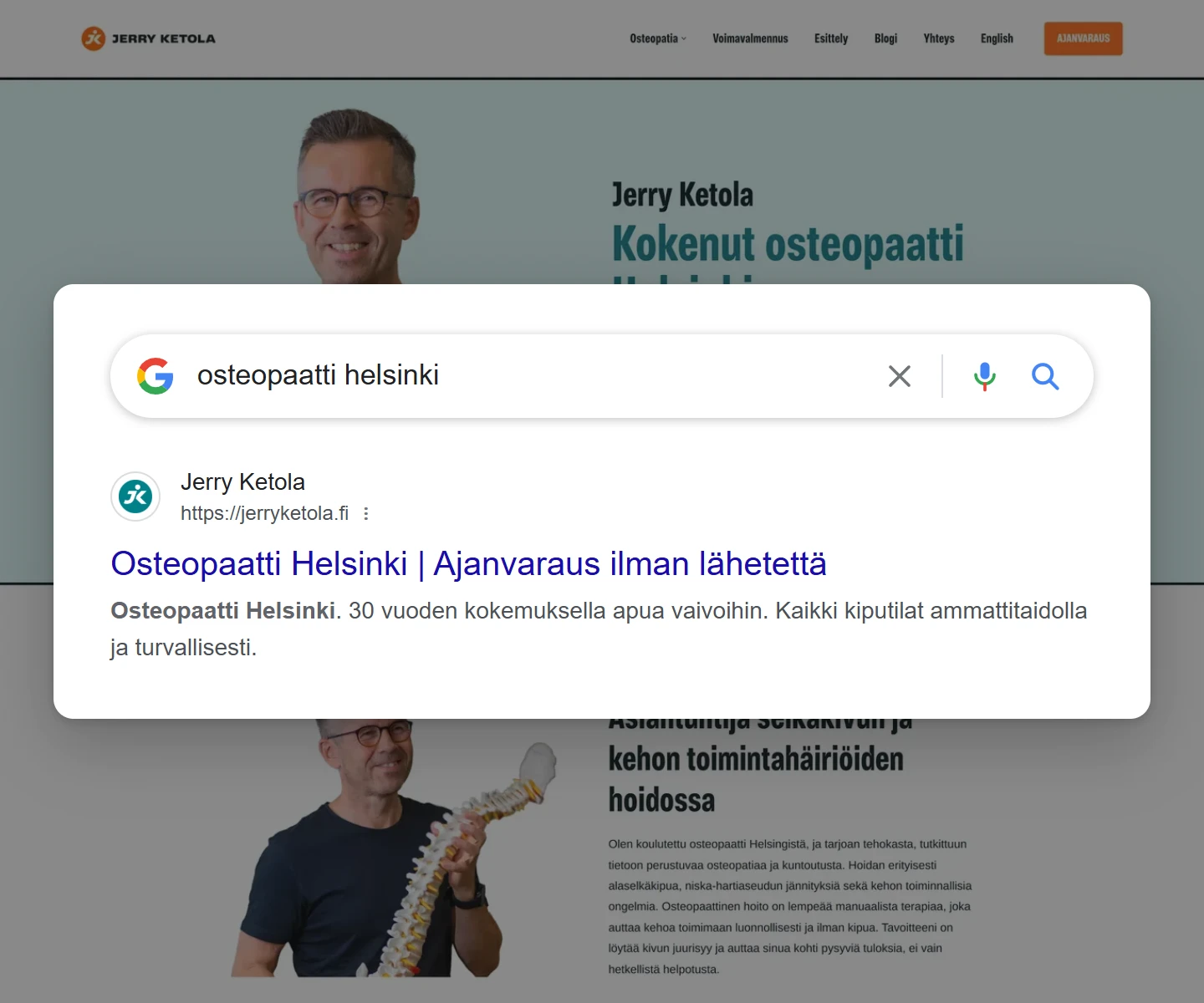
Technical and local SEO: page one of Google for “osteopaatti Helsinki”.
Me, Tapio Kauranen. I have been an entrepreneur since 2012 and have done SEO for clients ever since.
I help companies with SEO, Google Ads and WordPress websites.
I practised SEO on my own websites. One of them, Saliohjelma.com, is Finland’s most popular workout plan website.
I am also a co-owner of Kasvuasiaintoimisto Kansleri Oy, where I focus on Google and WordPress. I live in Porto and work remotely; Kansleri’s office is in Lempäälä, Finland.
Finnish is my native language, and we can work together in English.
Read more about me on the page Tapio Kauranen, Finnish SEO consultant, or see the list Finland’s best SEO experts. You can also email me at tapio@tapiokauranen.com.

SEO is part of the Coding SEO Consultant service: €760/month, typically 8 hours a month. There is no start-up fee. All prices exclude VAT.
Yes. We can talk, meet and email in English. The content your customers in Finland read, I write in Finnish, my native language.
SEO, website maintenance and development, Google Ads campaign management and a check-in meeting every month.
I typically work 8 hours a month and spend the hours where they bring the most.
Links from other websites are not included in the monthly price: 5 links are agreed as an option.
Results usually show in 3–6 months, so I recommend at least three months.
You can cancel at any time. There is no start-up fee.
No. The Google Ads budget is paid straight to Google. The monthly price includes managing and optimizing the campaigns.
Not necessarily. I also optimize your current website.
If you need a new one, I build WordPress websites on a custom quote. In the monthly service, its maintenance is included.
A 60-minute Google Meet call. We look together at how your website shows up on Google in Finland now, and what to do next.
After that, you decide whether you do the work yourself or want me to do it.
You can, if you have time to learn and to work on your website. Anyone can learn the basics, and the most important tools are free.
The price of free SEO is your own time, though. A good place to start is the beginner’s guide: the guides are below.
If you want to do SEO yourself, start with these. They are all free.
Basics
The English edition of Finland’s most-read SEO guide, for anyone new to SEO.
Advanced
When the basics are in hand: technical optimization, content structure and links.
Quick guide
SEO in ten steps, from keywords to links.
Free training
From the basics to analytics and tracking.
New guide
How to get AI to recommend your company.
Template
The template I use to go through every new client’s website. Do the same for your own site.
Links
What makes a good link, where to get links and which tactics to avoid.
Experts
Experienced Finnish SEO consultants and agencies, and what each does best.
We look together at how your website shows up on Google in Finland now, whether it has problems, and what I recommend.
Free SEO check
A 60-minute Google Meet call, in English. After that, you can decide whether you do the work yourself or want a quote from me. I promise not to push a sales pitch on you.