
Search Engine Optimization (SEO)
Search engine optimization (SEO) is the art of shaping a website to rank highly for the search terms you want.
Search engine optimization costs €500–€1500 per project
Read the guides if you want to do SEO yourself:
SEO guide for beginners
SEO guide for professionals
SEO quick guide – 10 steps to better visibility
Table of Contents
Start
Service
Do it yourself

What is search engine optimization?
I believe search engine optimization is one of the most important things you can do for a website.
SEO is about shaping your website in a way that search engines like.
Google’s job is to deliver the best possible answer to every search. Whoever manages to do that ranks highest.
- When I handle SEO, it delivers results. I don’t just report problems—I fix them.
- My services are always project-based. SEO is not an ongoing subscription. Clients often get visibility that lasts for years from a one-time optimization. See references.
- All services have a fixed price. Request a quote or view examples.
Who am I to talk about SEO?
The best SEO specialists are found on the first page of Google. You can find this site in the top 5 for the word “hakukoneoptimointi”.
I’ve been doing search engine optimization since 2015 for clients and my own web projects.
A few of those projects include:
- Saliohjelma.com – Finland’s most popular workout program site.
- Testamenttiopas.com – A guide to making a will
- Avioeroon.fi – A guide to divorce
- Parasvitsi.com – A joke site. Add yours
- Vaskiri.com – Job interview questions
- Yogabear.com – Yoga
Read on for client case studies below.

Search engine optimization references
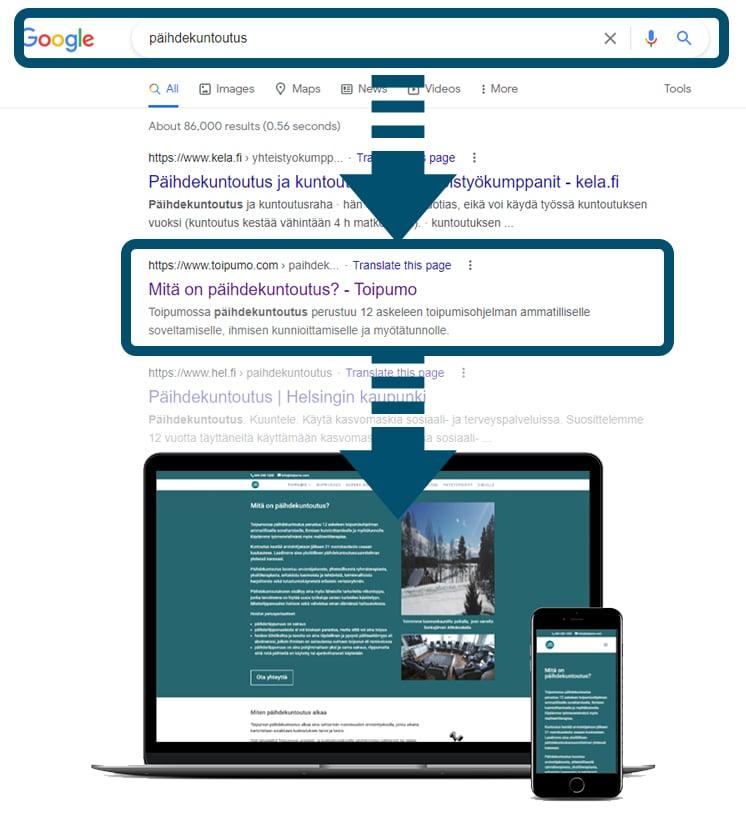
Toipumo pages with the keyword "substance addiction rehabilitation" on page one
Price range: around €500
In 2017 I optimized Toipumo’s page for the keyword “päihdekuntoutus”. The site has appeared on Google’s first page ever since.
The page quickly climbed to Google’s front page and has stayed there for years.
- Improved site loading speed
- Created a new page called “what is addiction rehabilitation”
- Built external links to the page
People search for addiction rehabilitation about 1,500 times per month. The page has received more than 18,000 clicks in five years.
SEO - Me vs. Others
| Miten muut tekee | Tapio Kauranen |
|---|---|
| You have to pay a monthly fee | One-time payment for years of visibility |
| No references or proof of results | See references here |
| Confusing pricing and offers | See an example offer here |
How much does SEO cost?
The price for website SEO is typically around €500–€1,500 (one-time fee). Request a quote.
SEO is a project — it doesn’t create ongoing costs. A one-time optimization can deliver results for years.
The price for SEO depends on, among other things:
- What is the current state of the site?
- How large is the site?
- How competitive is your field on Google?
A typical SEO project
- Discovery
- Review how your site currently appears in Google
- Analysis of current visitors: where they come from and who they are
- Audit of potential issues on the site
- Keyword research
- How often is each search term used?
- Which keyword opportunities should we target?
- Planning
- Fix plan if the site has technical issues
- Recommendations for on-site changes (headings, meta data, site structure)
- Suggestions for ongoing SEO development based on the keyword research — i.e. which terms to create content for
- Implementation
- Create the changes and new content based on the plan
- Monitoring
- Track results and provide a live dashboard
10 reasons to do search engine optimization
Search engine optimization helps people make a purchasing decision
- Ranking first in Google’s organic results gets an average 31.73% click-through rate
- The top result is 10x more likely to get a click than the 10th result.
- The organic click-through rate for positions 7–10 is the same. Moving up just a couple of spots can bring in more visitors.
- On average, gaining one position in rankings improves your click-through rate by 30.8%. This depends on which position you move up from. Moving from third to second gives much bigger gains, while going from 10th to 9th yields almost no benefit.
- Page titles framed as a question get on average a 14.1% better click-through rate than other titles.
- Titles that are 15–40 characters long get the best click-through rates. The study found that 15–40 character titles perform 8.6% better than other titles.
- URLs that include the search term get a 45% better click-through rate compared to other URLs for the same search
- Adding “power words” to your title can actually worsen your click-through rate, by up to 13.9%. These words include “Ultimate,” “Secret,” “Best,” “Biggest,” etc.
- Emotionally charged titles can improve your click-through rate. Titles that trigger positive or negative emotions can boost CTR by up to 7%
- Writing a meta description helps improve click-through rate. On average, pages with a description achieved a 5.8% better CTR than pages without one.
What SEO services include
To get your site to the top positions in Google search results, these tasks are typically performed.
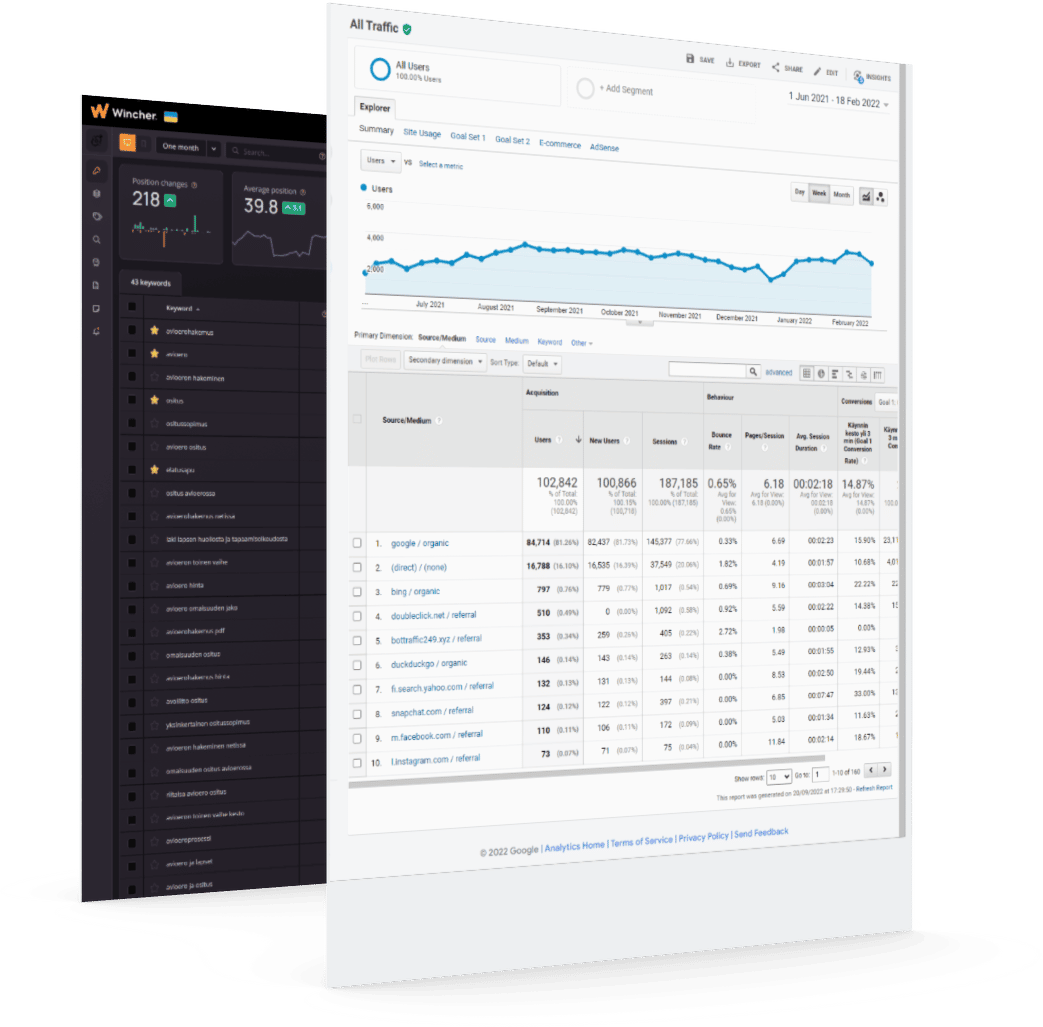
SEO starts with analyzing the current situation & making fixes
Let's see how your site appears on Google now, how customers search for your products, and what your potential visibility is.
- Load speed: We test the site's load speed with GTmetrix, the Google PageSpeed Tool, and Pingdom Tools. We fix performance issues if the site scores below 90/100.
- Code errors: Is the site coded correctly? Is it loading any unnecessary or slow files? We fix any errors.
- Meta data: Meta data gives Google extra information about a page—for example, the description. We make sure every page has its meta data in order.
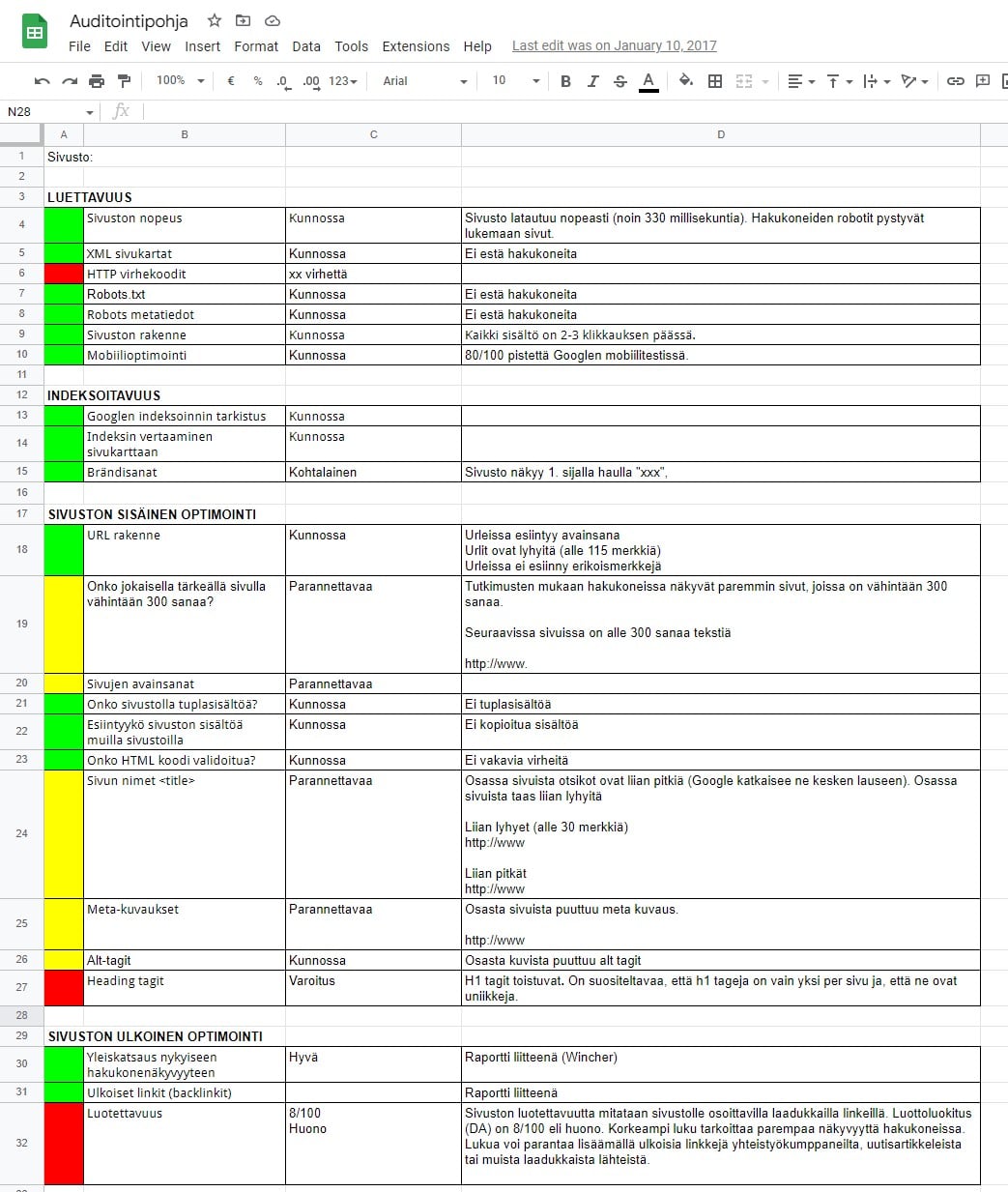
Technical audit
The audit reviews and checks the most critical aspects of search engine optimization. Below is a list of actions:
- Robots.txt. Does the Robots.txt file prevent search engines from reading pages?
- Robots meta tags. Do the Robots meta tags prevent search engines from reading pages?
- HTTP error codes. Are there errors like 404 (page not found)?
- XML sitemaps. Is the XML sitemap built correctly and has it been submitted to search engines?
- Site structure. Is all content within two clicks? Are there pages that have no links to them at all?
- Site speed. Google PageSpeed Insights and Pingdom Tools tests.
- Mobile usability. Google's mobile test and checking the site on a phone/tablet.
- Google indexing check. Which pages have search engines indexed?
- Compare index to sitemap. Does the number of pages in Google's index differ from the XML sitemap?
- Branded searches. Does the site appear in first position when searching for its own URL, brand, or company name?
- URL structure. Are the URLs short and user-friendly? Do they include the keyword?
- Page content. Is the page content substantial enough (over 300 words)? Does the content provide value to users (time on page)?
- Page keywords. Keyword research. Which query is each page optimized for? Can a page be optimized for a higher-volume keyword?
- Duplicate content? Does the site contain the same content multiple times, and is duplicate content handled with canonical tags?
- Copied content? Is any site text copied from other websites?
- Is the HTML valid? Are there serious errors in the HTML code?
- Titles, metas, alts and other tags. Are these set and clear? Are there spelling mistakes? Does the page keyword appear in the tags?
- Overview of current search visibility
- Reliability (Page Authority and Domain Authority figures)
- External links (backlinks). Number of links, whether they come from trustworthy sources. How many high-quality backlinks can be acquired?
- Social visibility. Presence and reach on social media. Facebook, Twitter, Pinterest, LinkedIn
- Top 10 competitors for the same searches. Comparison of the site and competitors, e.g. social media presence, backlinks, overlapping search queries, average rankings in search results.
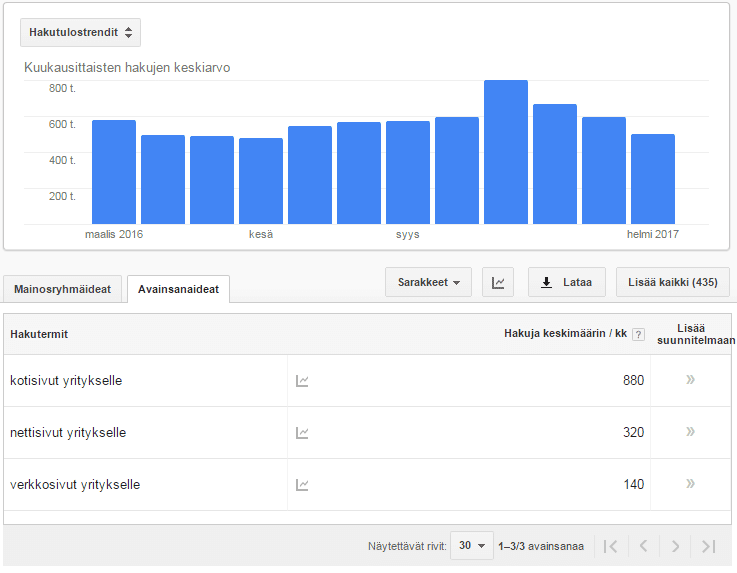
Keyword research
The idea behind SEO keyword research is to find the words people use when searching for your services.
SEO keyword research is the process of identifying the search terms and phrases your target audience uses when looking for information online. With keyword research I can optimize your content to better match users’ queries and improve your visibility in search engines.
Getting started
- Define: What do we want to achieve? (e.g. more traffic, better conversions).
- Audience: What does your typical customer look like?
- Analyze competitors: Review competitors’ sites and the optimization steps they’ve taken.
Tools for keyword research
- Google Keyword Planner: A free tool to discover new keywords and see their search volumes. Learn more
Analyzing keywords
- Search volume: I check how many searches a keyword gets per month.
- Competition: I assess how competitive a keyword is.
- Relevance: I make sure the keywords fit your content and target audience.
Selecting and implementing keywords
- I choose keywords that strike a good balance between search volume and competition.
- I integrate keywords naturally into page content, headings, meta descriptions and URLs.
- High-quality, informative content is central to search engine optimization.
Monitoring and optimization
- I use tools like Google Analytics and
Google Search Console to track your site’s performance.
On-site search engine optimization
On-site SEO refers to the actions taken within your website (not, for example, off-site work).
On-site optimization ensures your site's structure, content, and technical setup are in good shape so search engines can understand it better and deliver relevant results to visitors.
Basic principles
- Clear site structure: A well-organized, logical site hierarchy helps search engines index your content more effectively.
- Responsiveness and speed: I make sure your site works smoothly across devices and loads quickly, since this affects both user experience and search rankings.
Optimization measures
- URL structure: Use clear, descriptive URLs with keywords. This improves understanding of your content for both search engines and users.
- Meta data: Optimize title tags and meta descriptions to include key keywords and encourage clicks in search results.
- Internal links: Build a strong internal linking network that guides visitors to your most important pages and helps search engines find and index all parts of your site.
- Image optimization: Add alt text, reduce file sizes, and ensure images are responsive.
- Heading structure: Use clear heading levels (H1, H2, H3, etc.) to organize content and highlight important keywords.
Technical optimization
- Sitemap and robots.txt: Create an XML sitemap and make sure your robots.txt directs search engines to the right places.
- HTTPS and mobile-friendliness: Ensure your site uses HTTPS and is optimized for mobile, as these are important ranking factors.
- Analytics and tracking: Use tools like Google Analytics and Google Search Console to monitor your site's performance and identify areas for improvement.

SEO-optimized content production
Search-engine-optimized content creation is usually included in the price of an SEO project.
Your site will get new pages targeting search terms for which you don’t yet rank on Google.
One page is optimized for one search term. For example, this page you’re reading ranks for “hakukoneoptimointi” (search engine optimization) but not for “digimarkkinointi” (digital marketing), even though the topics overlap.
Creating SEO-optimized content isn’t always easy. To succeed you need a solid understanding of consumer psychology and online behavior.
Good SEO content includes the following
- Optimized for a single search term
- An attention-grabbing headline
- Meta information that encourages clicks / outperforms others
- Clear, informative content
- Images/lists/tables or other easy-to-scan elements
External SEO for the site
Off-page SEO focuses on actions that boost your website’s authority and visibility outside of the site itself.
This process relies on strong external signals — like high-quality backlinks, social media presence, and brand awareness — which together support your site’s rankings in search results.
Link building
- High-quality inbound links: Aim to get links from reputable, relevant sites. Quality links act as "votes" to search engines, boosting your site's authority.
- Guest posts and partnerships: Publish articles on industry blogs and look for collaboration opportunities that naturally lead to links.
- Natural link profile: Focus on a diverse link profile that includes both high-quality and local sources.
Social media and brand visibility
- Activate social channels: Use social platforms to share content and engage with your audience. This boosts brand awareness and can attract natural links.
- Content marketing: High-quality, informative content draws visitors and encourages other sites to share your material, supporting off-site optimization.
- User reviews and recommendations: Encourage customers to leave positive reviews and recommendations to build your brand’s credibility.
Local SEO and brand reputation
- Local directories and listings: Register with local business directories, such as Google My Business, so customers can find you more easily.
- Review management: Monitor and respond to customer feedback proactively. Positive reviews support both local visibility and search rankings.
- Partner with local organizations: Network with regional businesses and organizations to gain more visibility and links.
Off-site optimization is a long-term strategy that requires ongoing monitoring and updates. By investing in quality link building, social visibility, and your brand’s reputation, you strengthen your site’s competitive position and improve search engine rankings.
Backlinks
Links from other sites are the hardest part of SEO.
A single high-quality link from another site can double your visibility. "High-quality" means the site covers the same topic as yours and doesn't look like spam.
Effective ways to get high-quality links:
- You can get links from my link networks
- You can get a link as a reference from this site
- You can ask your clients to add your site as a reference on their sites
- You can write guest posts for other sites' blogs
Below is an explanation of what makes a good link
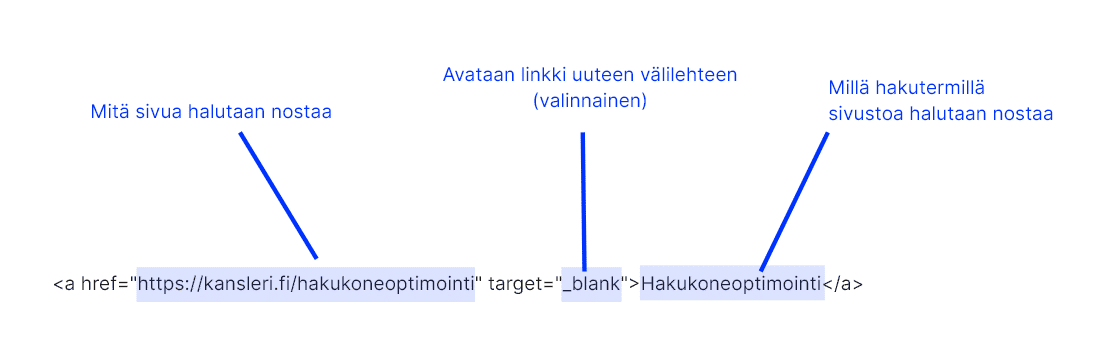
And these, in turn, are bad links

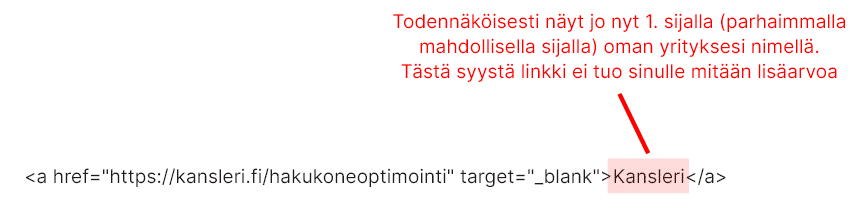

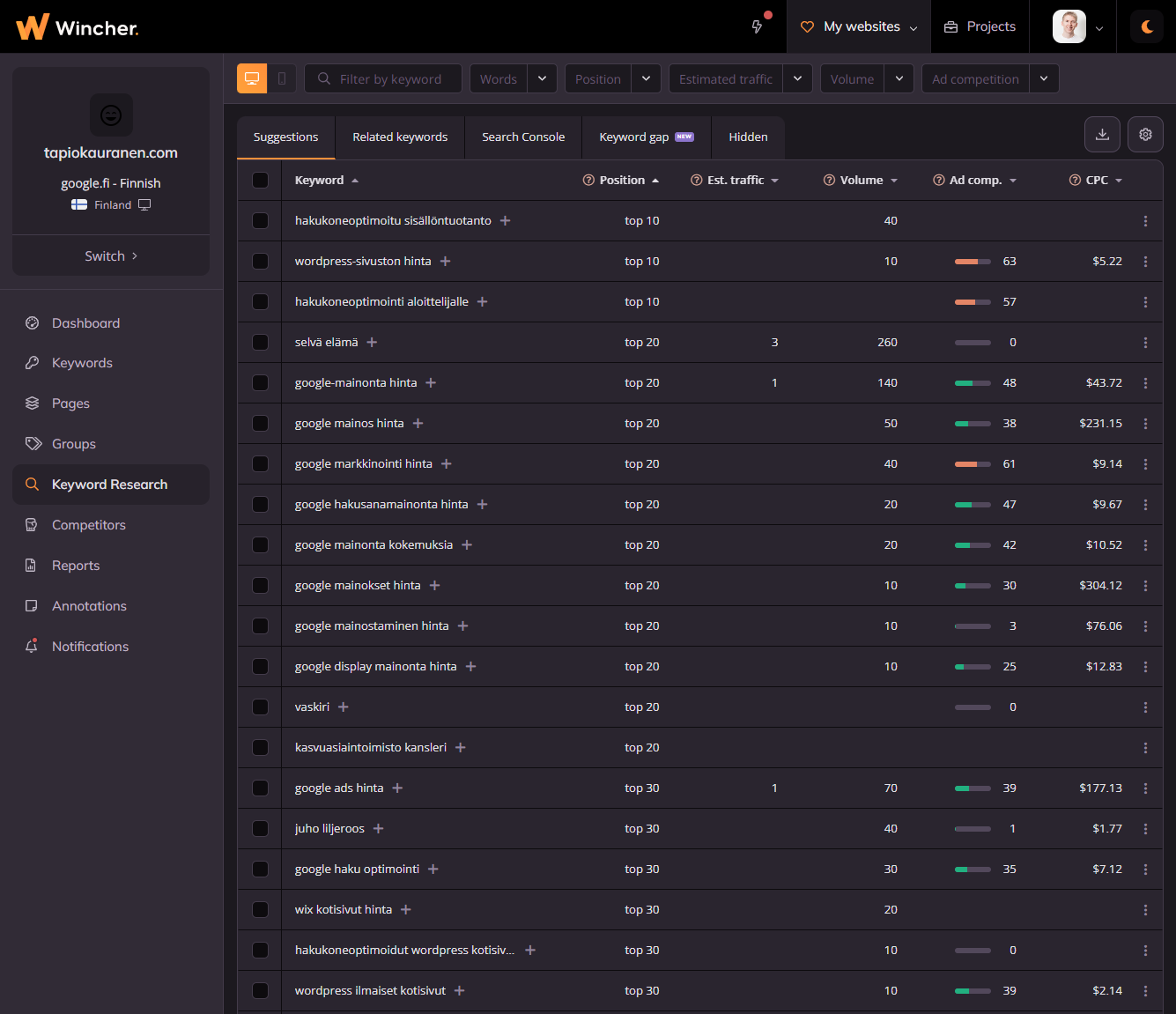
Search engine optimization monitoring
It's important to monitor SEO. Often results show up several weeks or even months after actions are taken.
Monitoring SEO is easiest with Google Search Console and a paid tool like Wincher.
- How keyword visibility changes day by day
- Search volume trends / how many searches per month
- How competitors appear in search
- What percentage of the total search market you own (Share of voice)
SEO guide & how to do SEO yourself
Search engine optimization (SEO) is the practice of shaping a website so it ranks highly for the search terms you want.
Read the guides if you want to do SEO yourself:
SEO guide for beginners
SEO guide for professionals
The history of search engine optimization
- Early days: SEO traces back to the late 1990s and early 2000s, when search algorithms were much simpler. Site rankings were often determined by keyword density and visibility.
- Google and algorithm updates: Google rose to the top of search engines by delivering the best results for queries. Updates like Panda, Penguin and Hummingbird began to emphasize content quality, user experience and the naturalness of links. These updates aimed to combat manipulation of search results and provide users with more relevant results.
- Modern approaches: In recent years search engines have gotten much better at understanding user intent, and SEO has evolved to include holistic content marketing, technical optimization, mobile optimization, and improving user experience.
The future of search engine optimization
- Personalization and user experience: Search engines are making their algorithms increasingly personal. Optimizing the user experience will become even more important, as search results are tailored based on individual user data and behavior patterns.
- Growth of mobile and voice search: The rise of mobile devices and voice-controlled search is driving development toward mobile-friendly sites and pages optimized for voice.
- The role of AI: Artificial intelligence will transform SEO strategies as search engines become better at analyzing content, understanding context, and predicting user needs. AI-powered tools help optimize content in real time and anticipate changes in search algorithms.
How will AI affect search engine optimization?
- Search engine algorithms: Search engines, especially Google, use AI and machine learning (like RankBrain and BERT) to better understand queries and content context. That means content quality and relevance matter more than just keyword usage.
- Data analytics: AI tools help analyze large datasets to uncover new keywords, trends, and optimization opportunities, enabling more precise and targeted SEO strategies.
- Personalization: AI enables delivering tailored user experiences, making it easier to customize site content for different audience segments. This can boost user engagement and site conversions.
How AI-generated content affects SEO
- Ensuring quality: AI can produce large volumes of content quickly, but maintaining quality is crucial. Search engines favor natural, value-adding content for users, so quantity alone isn’t enough.
- Optimization and personalization: AI can analyze user data and optimize content in real time. This enables personalized content and better engagement, which can improve search rankings.
- Risks and challenges: Overreliance on AI-generated content without human editing can lead to quality decline, potentially harming a site’s SEO value. Search engines may also detect artificial content, which can result in penalties.
- The importance of creativity and the human touch: While AI offers powerful tools for content creation, human-crafted, creative, and targeted content remains a competitive advantage because it better meets the needs of the target audience.
What is keyword research
Keyword research is the same thing as keyword analysis. Its purpose is to find out which words people use to search for your services on Google.
- Where people search for your products (Google, Bing, YouTube or other platforms)
- Which search queries people use when looking for your products
- Which devices people use to search for your products (desktop, mobile, tablet)
With this information, each of your pages can be targeted to the right Google search.
Common SEO problems and answers
-
Keyword research mistakes
Keyword research can be misinterpreted, leading you to target irrelevant or highly competitive terms. You might spend a lot of time and energy on keywords that don’t actually deliver results. -
Lack of quality content
Low-quality content, spam, or poorly produced AI-generated content can get your site into trouble. Google’s goal is to return the most relevant result for every search. If your site doesn’t provide any value to visitors, Google may remove it from search results entirely.
-
Slow site load time
Your site should load in under 2.5 seconds — people won’t wait more than about 3 seconds for a page to load. -
Poor mobile friendliness
Regardless of industry, about 70% of your visitors now use mobile devices. If your site doesn’t work well on mobile, it won’t show up well in Google either. -
Unclear URL structure
Weird or unclear URLs make your site harder to use and hurt your visibility in search engines. -
Neglecting meta-data optimization
Meta data isn’t strictly required, but it’s one of the easiest ways to improve search visibility. Meta data refers to the title and description that appear in Google’s results. A well-optimized title and description can make people choose your link over others in the same search. -
Misuse of heading tags
Multiple H1 tags or incorrect heading hierarchy can negatively affect your SEO. It also makes the site harder to use for people with low vision or screen readers. -
Lack of internal links
Each page should include at least one link to another page on the site. This helps visitors move to the next section or complete the desired conversion on your pages. -
Weak external linking
Each page should also link out to at least one external site. This could be a source link for quoted text or something similar. -
Neglecting image optimization
Large, unoptimized images slow the site and don’t support SEO -
Missing sitemap
Search engines can’t find all pages without an XML sitemap. -
Robots.txt errors
A misconfigured robots.txt can block important pages from being indexed. -
Not using analytics tools
Without analytics, it’s hard to measure the impact of your SEO efforts. -
Skipping competitor analysis
You won’t know how competitors operate, which can lead to a weak strategy. -
Old, outdated content
Content that no longer matches current search trends can lose rankings. -
Keyword stuffing
Excessive repetition of keywords can lead to penalties from search engines.
Answer: Use keywords naturally and focus on quality over quantity. -
Neglecting local SEO
Businesses miss local audiences without proper local signals. -
Lack of social media visibility
Weak social presence can limit content reach and link potential. -
Poor brand reputation management
Negative reviews and a weak brand image can hurt SEO. -
Website security issues
Lack of HTTPS can undermine visitor trust and rankings -
Poor user experience (UX)
Bad navigation and unclear site structure reduce user engagement. -
Broken links
Broken links — that is, links that don't work — are a bad sign for SEO.
-
Excessive promotional links
Links to external sites are useful, but too many can hurt your visibility. Don’t pack your pages full of links to other sites. -
Duplicate content publishing
If you publish the same content on multiple pages or copy content created by someone else, Google is unlikely to rank your content highly in search results.
Download the free SEO audit template
The easiest way to test the items in the audit template is to use the Screaming Frog SEO Spider.
A free desktop tool you can install that analyzes gaps in your site's search visibility.
I use this audit template with every new client. The goal is to get each item into the green before moving on to the next step.
Mobile-first SEO
Since 2019, Google has ignored desktop versions of websites entirely. Source:Google's blog post on the subject.
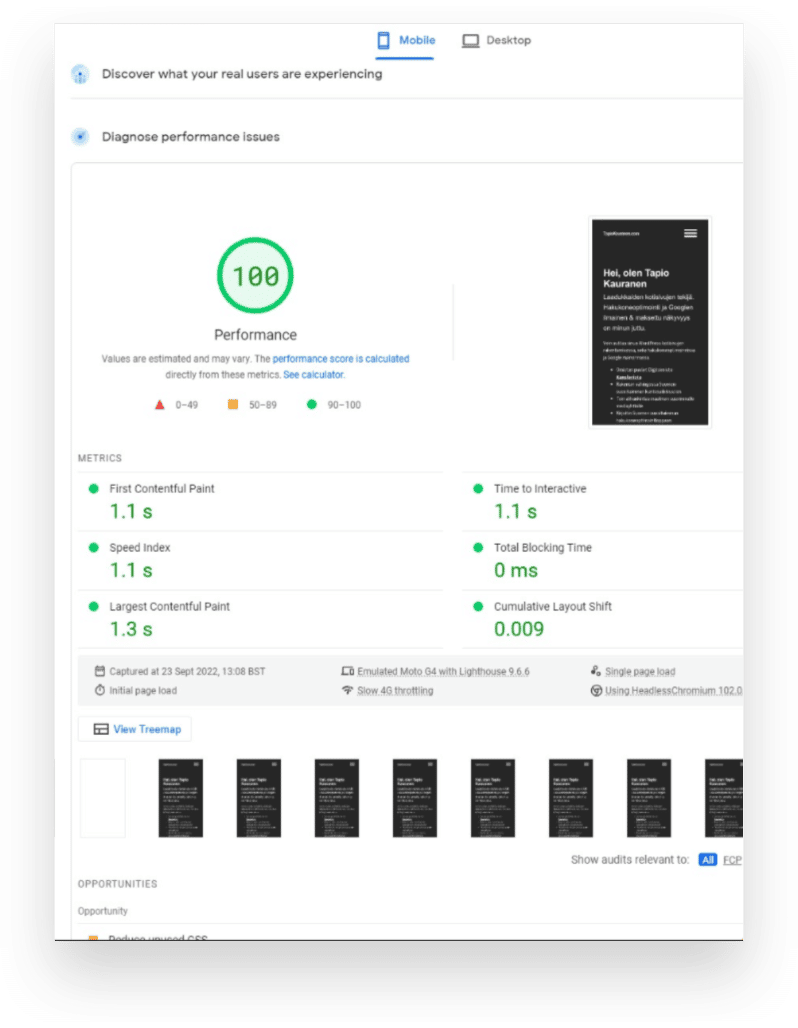
All speed and usability tests are carried out on the mobile version. The speed and usability guarantee therefore focuses primarily on optimizing the mobile site, since Google doesn’t consider the desktop version.
- In Google's speed test you need to score over 90/100 to get a green result.